
Choosing the Right Caster Wheel Assembly
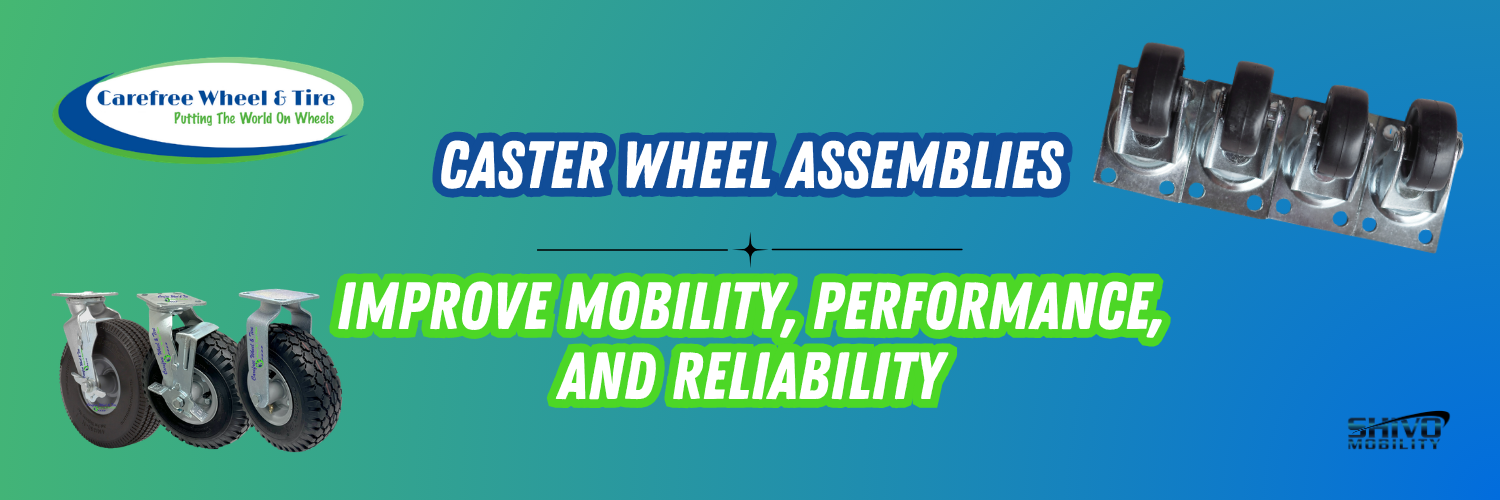
Which Caster Assembly Is Right for You?
Before selecting a caster, consider the total equipment weight, floor conditions, exposure to moisture or chemicals, required maneuverability, and how frequently the equipment will be moved.The best caster assembly depends on how and where it will be used.
Swivel Caster Assemblies
Swivel casters rotate to allow equipment to move in multiple directions. They are a practical choice when maneuverability is important, especially in narrow aisles or confined work areas.
Common applications include:
- Material-handling carts
- Utility carts
- Toolboxes
- Workstations
- Mobile racks
- Food-service equipment
Rigid Caster Assemblies
Rigid casters remain fixed in one direction, providing stable movement along straight paths. They are often used on equipment that travels forward and backward or alongside swivel casters for a balance of control and maneuverability.
Common applications include:
- Platform trucks
- Warehouse carts
- Dollies
- Material-handling equipment
- industrial racks
- Heavy-duty transport equipment
Pneumatic Caster Assemblies
Pneumatic casters use air-filled tires to absorb shock and roll more easily over uneven or rough surfaces. They can be especially useful when protecting the load from vibration is important.
Common applications include:
- Outdoor carts
- Landscape equipment
- Nursery carts
- Job-site equipment
- Mobile generators
- Equipment used on gravel or uneven pavement
Flat-Free Caster Assemblies
Flat-free casters provide cushioning similar to pneumatic tires without the risk of punctures or air loss. They are a dependable option for applications where reducing maintenance and downtime is a priority.
Common applications include:
- Industrial carts
- Nursery and landscaping equipment
- Warehouse equipment
- Outdoor utility carts
- Maintenance equipment
- Material-handling applications
Additional Factors to Consider
Along with wheel type, several other details can help determine the proper caster assembly:
- Load capicity per caster
- Wheel diameter and width
- Swivel or rigid construction
- Mounting plate or stem style
- Floor and surface conditions
- Indoor or outdoor use
- Exposure to water, oils, chemicals, or extreme temperatures
- Braking or locking requirements
Always calculate the total weight of the equipment and its maximum load when determining the required caster capacity. Choosing an assembly with the appropriate rating can improve safety and extend its service life.
Keep Your Equipment Moving with the Proper Caster
The right caster wheel assembly should match the equipment, operating environment, and expected load. A carefully selected caster can improve maneuverability, protect surfaces, reduce maintenance, and provide more reliable movement.
Carefree Wheel & Tire offers caster wheel assemblies for a variety of industrial, commercial, warehouse, nursery, landscaping, and material-handling applications. Whether you are replacing worn casters or selecting components for new equipment, the proper assembly can help keep your operation moving.